Study Group
AI Study Group: April 2025
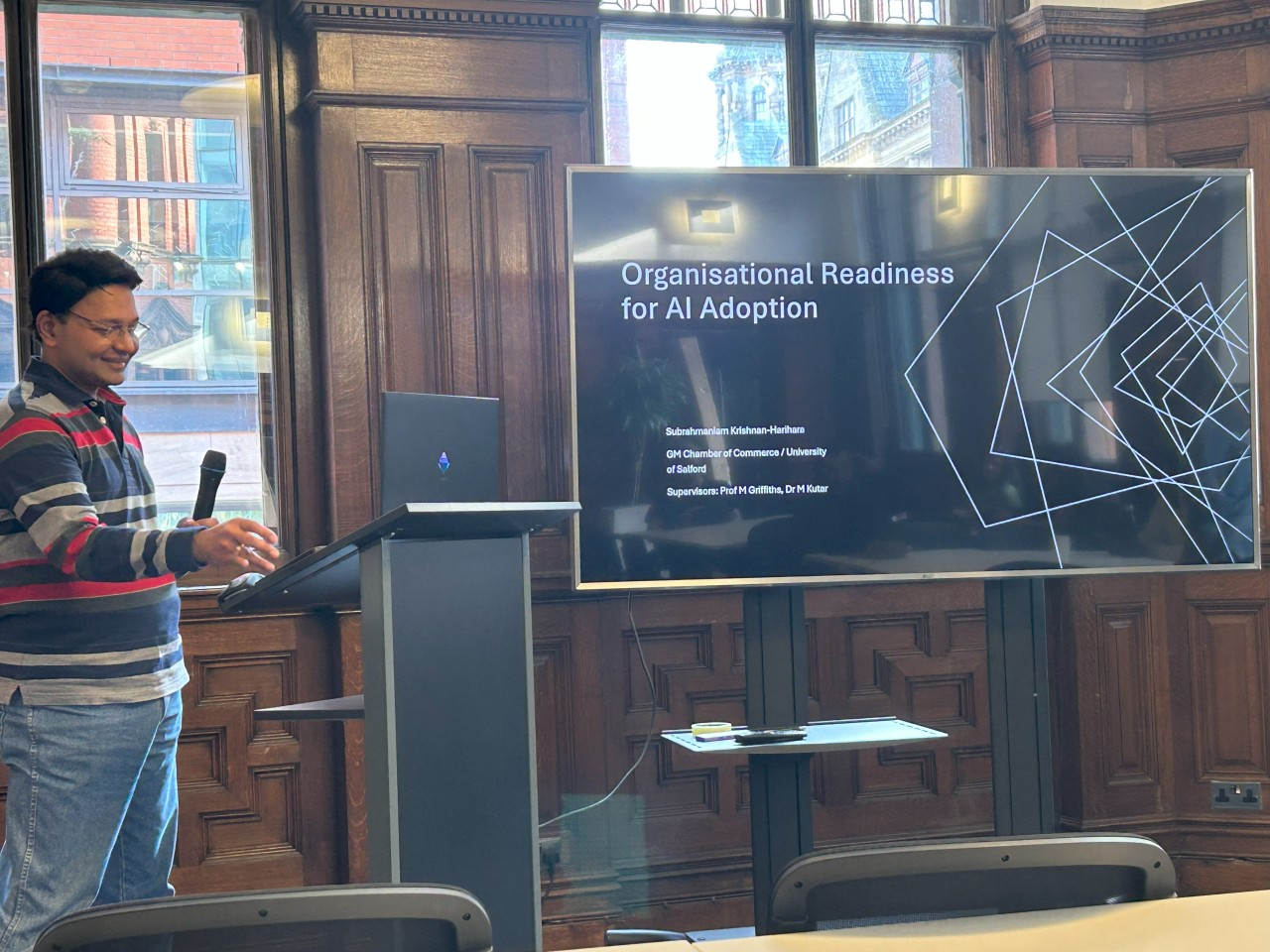
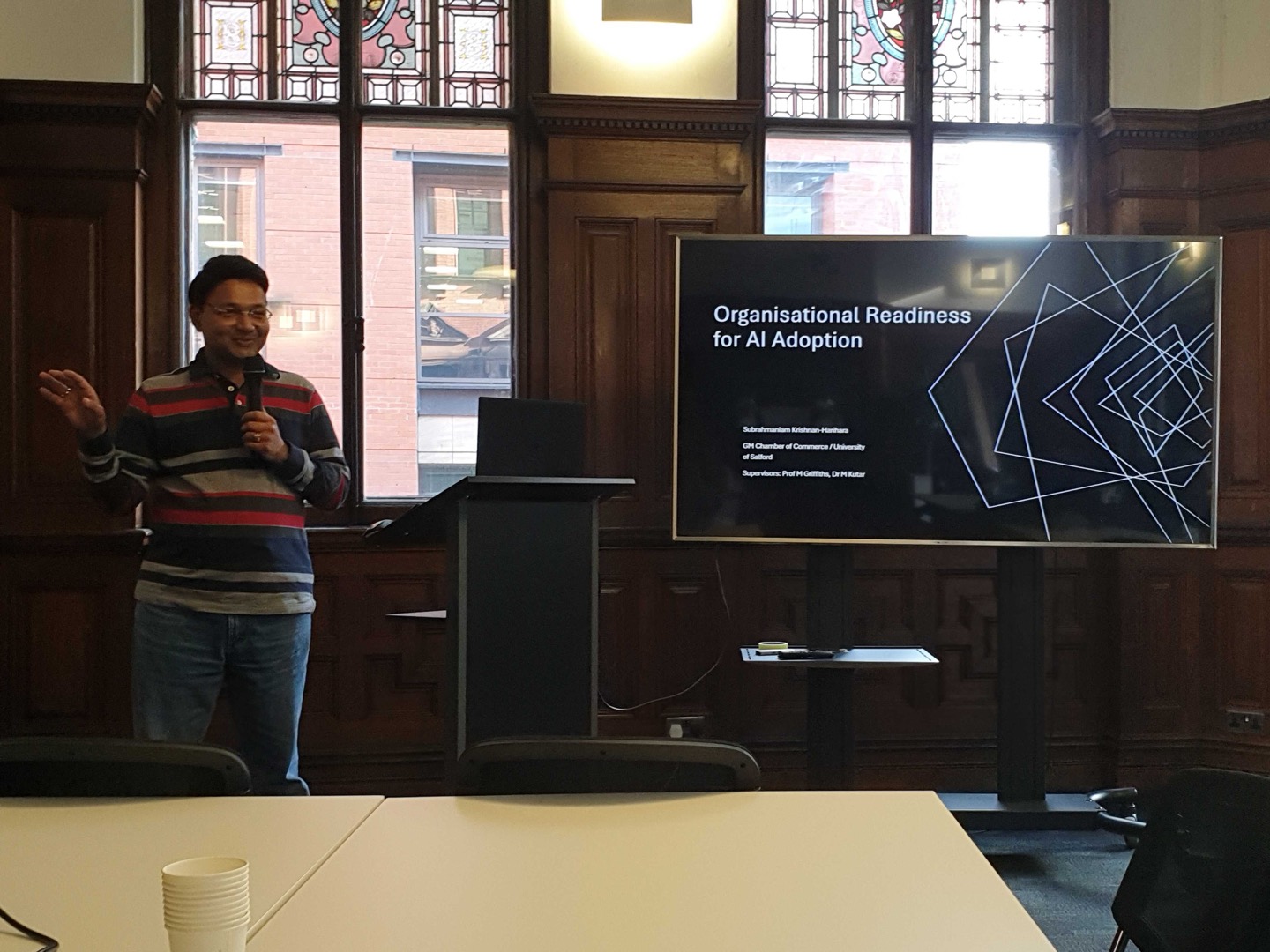
Summary of “Organisational Readiness for AI Adoption” by Subrahmaniam Krishnan-Harihara
Subrahmaniam Krishnan-Harihara’s talk on “Organisational Readiness for AI Adoption” explores the often challenging journey organisations face when integrating artificial intelligence (AI) technologies into their operations. Drawing from a research study involving businesses in Greater Manchester (GM), the presentation seeks to uncover the underlying factors that constitute organisational readiness for AI, aiming to formulate a unified AI readiness framework and a robust assessment tool to evaluate these factors comprehensively.
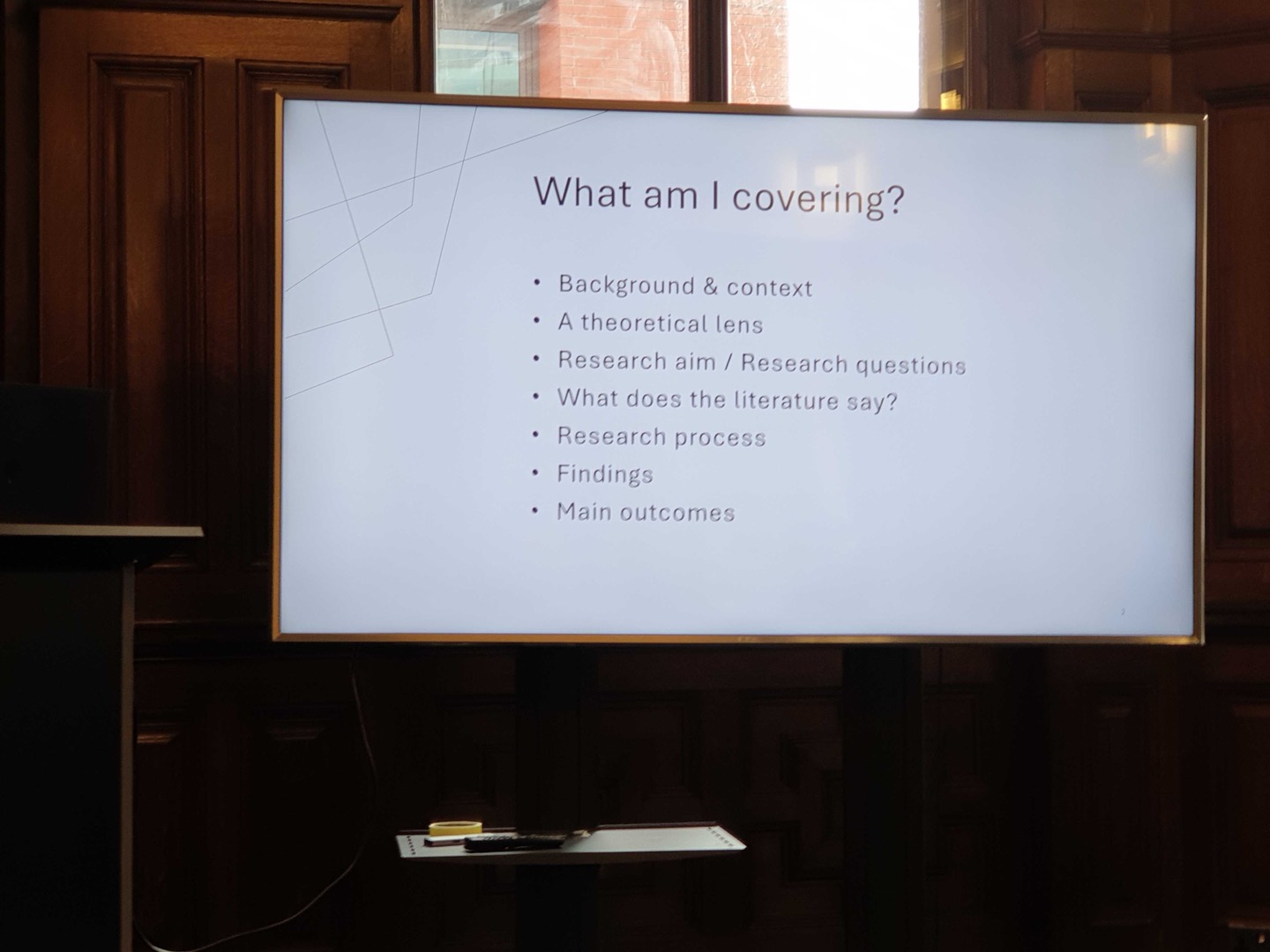
Background and Context
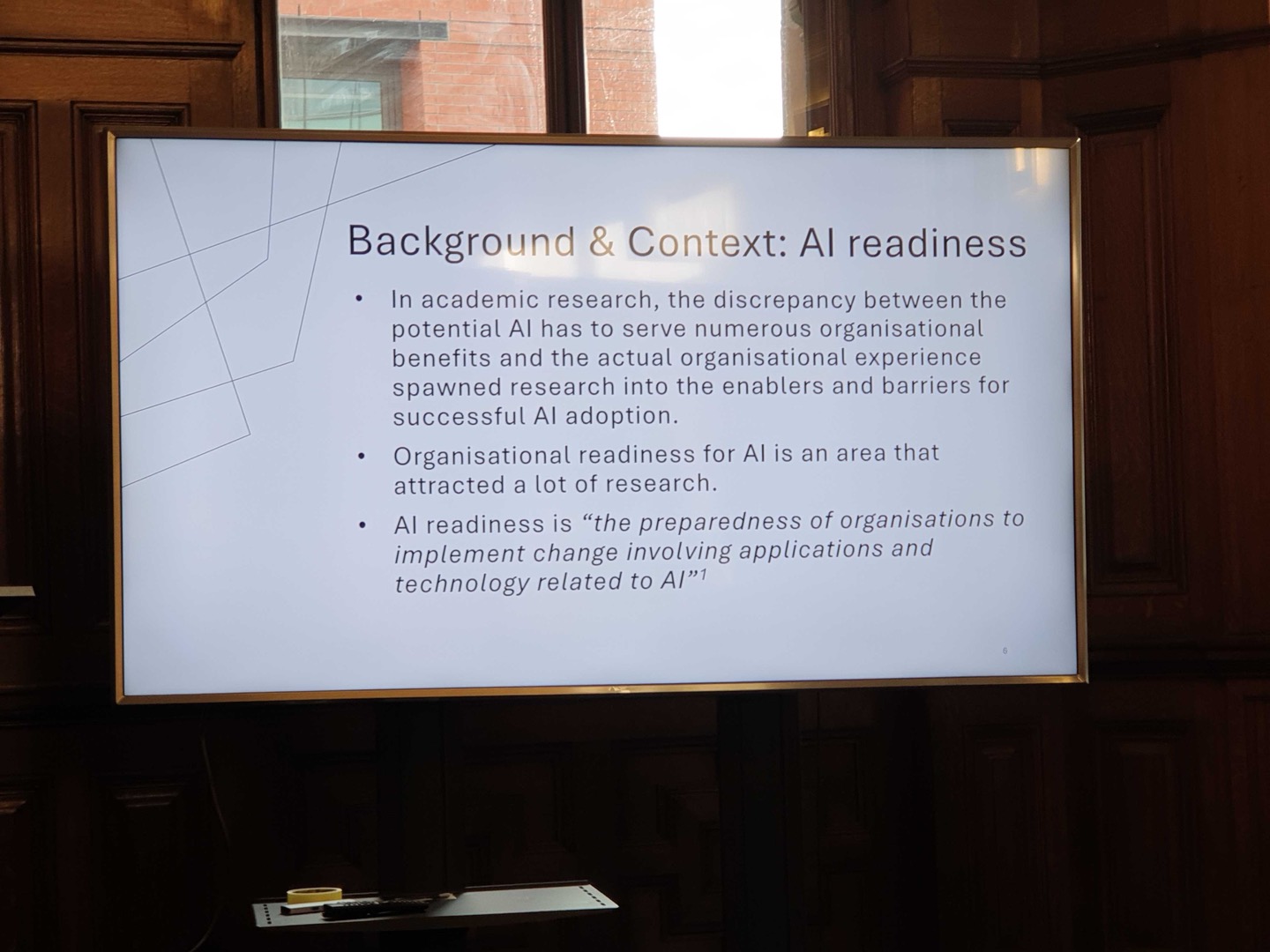
Although AI holds immense promise for transforming organisational performance, the reality of adoption is fraught with challenges. Numerous studies, both academic and practitioner-led, have highlighted a consistent gap between AI’s potential and actual organisational outcomes. A key factor contributing to this gap is the lack of “organisational readiness”—defined as an organisation’s preparedness to implement changes involving AI technologies. This includes the capacity to adopt new systems, align AI with business goals, and adapt structurally and culturally.
Krishnan-Harihara argues that organisations must conduct formal readiness assessments before embarking on AI initiatives. Such assessments help identify infrastructure issues, cultural misalignments, and skill gaps that could obstruct implementation efforts. The speaker emphasizes that without readiness, even advanced AI systems may fail to deliver value.
Theoretical Framework and Research Process
The talk applies a theoretical lens to understand AI readiness, with the aim of bridging the conceptual and practical divide. The research is part of a larger academic project supported by a Campion Grant and was carried out by studying a diverse range of businesses in Greater Manchester. The approach combined literature reviews, interviews, and qualitative data to uncover real-world insights.
Findings
Several practical barriers emerged from the study. Participants cited challenges such as outdated infrastructure and siloed data systems that make AI integration difficult. One participant mentioned, “Each department has their own database, which makes AI integration a nightmare,” illustrating how fragmented internal systems can act as a roadblock. Another issue raised was the mismatch between available AI tools and actual business needs—emphasizing that technology alone is not sufficient without strategic alignment and organisational fit.
Outcomes and Implications
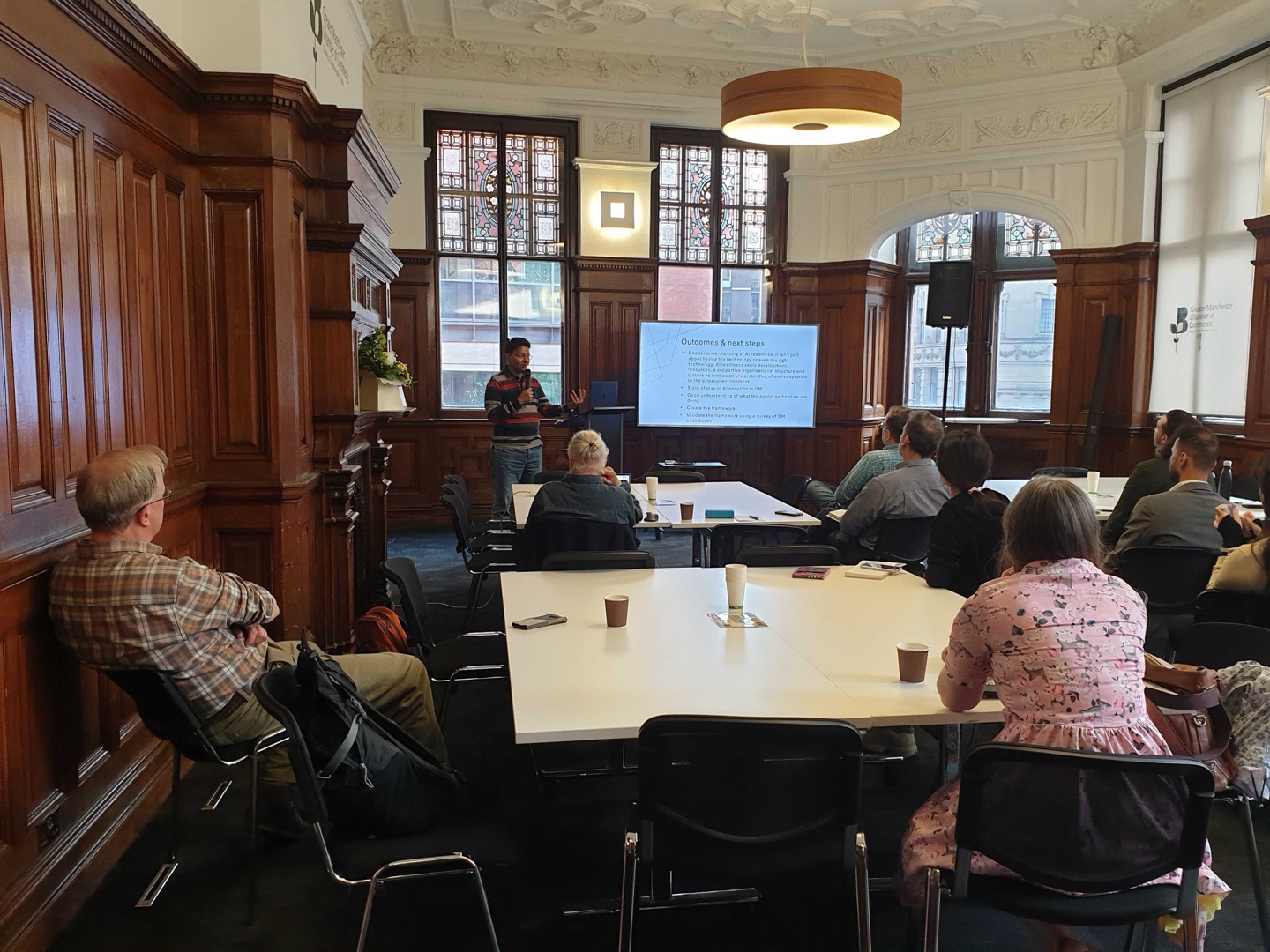
The key outcome of the research is a more nuanced understanding of AI readiness. It encompasses more than just access to advanced technology. True readiness includes organisational skills development, resource allocation, supportive culture, and adaptability to external environmental shifts. The research also documented the current state of AI adoption across GM, showing varied levels of preparedness and involvement from public authorities.
Looking ahead, Krishnan-Harihara aims to develop and validate an AI readiness framework tailored to the needs of local businesses. This will be tested through a broad survey of Greater Manchester firms. The ultimate goal is to offer both theoretical contributions to academic understanding and practical tools for businesses to self-assess and improve their readiness for AI.
Through this study, the talk contributes meaningfully to the discourse on AI in organisations—shifting the focus from technological capability alone to a broader, more holistic view of what it takes to successfully adopt and benefit from AI.